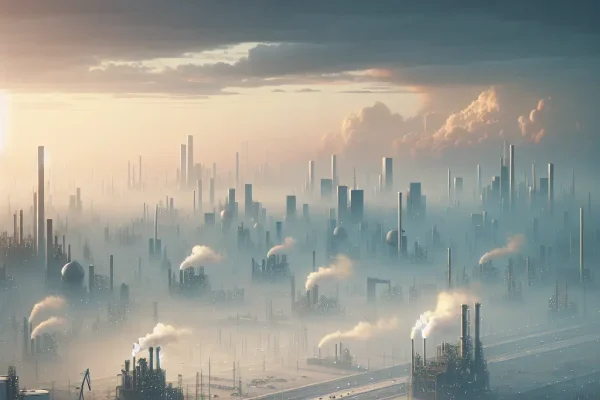
Could the air you breathe become dirtier overnight? In a move sharply criticized by environmentalists and public health advocates, the Trump administration has announced a major rollback in federal emissions tracking. As of June 2024, the Environmental Protection Agency (EPA) will halt its rigorous monitoring requirements for America’s top polluters, potentially leaving millions exposed to increased industrial emissions and their adverse health effects (Reuters, 2024).
This dramatic shift in policy isn’t just a bureaucratic change—it’s a seismic moment for climate action, public health, and the longstanding mission to hold large industries accountable. With critics warning of unchecked pollution and historic environmental deregulation under Trump, many ask: how will ending emissions tracking affect pollution, and what does this mean for the future of US air quality?
The Problem: What’s Happening with EPA Emissions Oversight?
This month, the EPA issued new guidance rolling back a decades-old rule that required continuous reporting and tracking of hazardous air pollutants by major US industries—think refineries, power plants, and chemical manufacturers. Under the revised guidelines, these businesses will no longer have to regularly submit detailed emissions data or undergo third-party monitoring for greenhouse gases and volatile organic compounds (The New York Times, 2024).
Industry groups, long stymied by environmental regulations, have hailed the change as a watershed moment they say will streamline compliance, cut costs, and boost competitiveness. “This is the most significant environmental deregulation under Trump so far,” according to a senior executive at the American Petroleum Institute, echoing sentiments celebrated in Bloomberg’s industry coverage (Bloomberg, 2024).
But critics argue that the EPA’s decision to stop monitoring top polluters removes a crucial check on some of the nation’s largest greenhouse gas emitters. Without federal emissions tracking, watchdogs warn, companies are left to “self-report,” opening the door to underreported pollution and a slide in US environmental standards.
Scope of the Rollback
- Suspension covers over 2,000 major facilities, including steel mills, oil refineries, and cement plants
- Tracking ends for both air toxics and greenhouse gases
- No federal verification—states may fill the gap, but most lack resources
Why It Matters: Health, Jobs, and the Economy on the Line
This rollback is not just about numbers on a spreadsheet—it has immediate consequences for communities, workers, and future generations. The EPA’s own data shows that industrial air pollution disproportionately impacts low-income and minority neighborhoods, where childhood asthma rates are 2-3 times higher than the national average (EPA Environmental Justice Strategy).
“When the EPA stops monitoring top polluters, it’s everyday Americans who pay the price—with their health,” warns Dr. Linda Martinez, a public health policy expert. According to the American Lung Association, short-term spikes in pollutants like sulfur dioxide and nitrogen oxides are linked to asthma attacks, heart disease, and premature death (Source).
Emotional and Economic Impact
- Asthma-related ER visits are projected to rise by up to 10% in regions near industrial corridors (ALA, 2023)
- Lost worker productivity and school absences could cost the economy over $2.5 billion annually
- Property values decrease in high-pollution areas, deepening economic inequality
For local economies—particularly in manufacturing and energy-heavy states—this rollback may bring short-term job retention. But experts caution that long-term costs of increased pollution, higher healthcare demand, and lost productivity could outweigh immediate industrial savings.
Expert Insights & Data: What the Numbers Say
Let’s break down the data and insights from leading authorities and recent reports:
- Reuters reports that after similar regulatory relaxations in 2017, several states saw a 15–20% increase in reported emissions from major polluters (2024).
- The New York Times analysis highlights that up to 98 million Americans live within 5 miles of facilities affected by the rollback (2024).
- Bloomberg notes industry leaders anticipate savings of $700 million per year by reducing compliance paperwork and third-party audits (2024).
- EPA Insiders: “We’re eliminating essential tools for holding polluters accountable,” says a former EPA enforcement officer.
What Does This Mean for US Air Quality After EPA Tracking Changes?
The impact of ending emission tracking is likely to be uneven. In states with strong local oversight—such as California—pollution levels may remain steady. Elsewhere, especially in areas dependent on heavy industry, pollution could rise substantially, with little transparency or accountability.
Visualization Idea
Infographic/Table: “Emission Reporting Rollbacks: Projected Pollution vs. Monitored Pollution (2015–2028)” showing changes in reported emissions before and after deregulation, segmented by industry and region.
Future Outlook: Risks, Opportunities, and the Next 5 Years
This decision marks a pivotal inflection point. Experts predict an initial “invisible wave” of increased local air pollution as the consequences of less EPA oversight play out. Environmental advocates argue that recovery from this deregulation, if it happens at all, could take a decade or longer.
On the other hand, supporters say the rollback enables American industry to innovate and self-regulate more efficiently, potentially using new technologies for independent monitoring. Yet, with federal enforcement now sharply reduced, the risk of environmental abuses and data manipulation remains high.
Predictions for the Next 1–5 Years
- Potential lawsuits: State attorneys general and advocacy groups are likely to file challenges to restore EPA tracking
- Rise of public-private air quality monitoring networks
- Possible reversal under a future administration—but regulatory uncertainty could hamper investment in clean tech
- Long-term effects of EPA deregulation may include widened disparities in air quality and public health outcomes
Case Study: Comparing US and EU Emissions Oversight
| Factor | United States (Post-Rollback) | European Union |
|---|---|---|
| Federal Emissions Tracking | Mostly voluntary/self-reported | Mandatory quarterly reporting |
| Independent Audits | Rare, states may fill gap | Frequent, EU-wide inspections |
| Penalty Structure | Minimal without federal oversight | Significant, fines up to millions |
| Public Access to Data | Limited or delayed | Real-time public dashboards |
Chart Idea: Side-by-side bar graph visualizing the difference in reported industrial emissions between the US (post-rollback) and EU (with strict oversight).
Related Links
- [External: Link to MIT air quality study]
- [External: Link to NASA greenhouse gas data]
- [External: Link to Wall Street Journal report on EPA rules]
FAQs About the Trump EPA Emissions Tracking Rollback
- Why did the EPA stop tracking greenhouse gases?
- The Trump administration argues the rollback reduces bureaucratic burdens on industry and allows for more flexible, cost-effective compliance. Critics say it’s driven by lobbying from major polluters.
- How will ending emissions tracking affect pollution?
- Experts warn it could increase pollution, especially in regions without strong local oversight. Accurate pollution data may become scarce, hampering regulatory response.
- What are the consequences of less EPA oversight?
- Potential risks include higher local emissions, diminished public health protections, and reduced data transparency for researchers and the public.
- What is the impact of ending emission tracking on air quality?
- The impact will vary by region, but urban and industrial communities could see deteriorating air quality over the next several years.
- What are the long-term effects of EPA deregulation?
- Long-term, the US risks lagging behind in global efforts to combat climate change, facing widening disparities in air quality and associated health outcomes.
Conclusion: An Uncertain Path for American Air
The Trump EPA emissions tracking rollback may mark a turning point in US environmental oversight. While some celebrate it as a victory for industry, public health and climate advocates warn that Americans could pay the ultimate price—in doctor’s visits, lost workdays, and uncounted tons of invisible pollution drifting through the nation’s air. It’s a gamble with the atmosphere itself as the stakes. With federal eyes no longer on the country’s top polluters, whose air are we really breathing now?